AI Detector Xero

AI Detector Xero — independent reviews, comparisons, pricing and step-by-step guides on Aizhi.

  • ALL-IN-1

    ALL-IN-1

    ALL-IN-1 was an office automation product developed and sold by Digital Equipment Corporation in the 1980s. It was one of the first purchasable off the shelf electronic mail products. It was later known as Office Server V3.2 for OpenVMS Alpha and OpenVMS VAX systems before being discontinued. == Overview == ALL-IN-1 was advertised as an office automation system including functionality in Electronic Messaging, Word Processing and Time Management. It offered an application development platform and customization capabilities that ranged from scripting to code-level integration. ALL-IN-1 was designed and developed by Skip Walter, John Churin and Marty Skinner from Digital Equipment Corporation who began work in 1977. Sheila Chance was hired as the software engineering manager in 1981. The first version of the software, called CP/OSS, the Charlotte Package of Office System Services, named after the location of the developers, was released in May 1982. In 1983, the product was renamed ALL-IN-1 and the Charlotte group continued to develop versions 1.1 through 1.3. Digital then made the decision to move most of the development activity to its central engineering facility in Reading, United Kingdom, where a group there took responsibility for the product from version 2.0 (released in field test in 1984 and to customers in 1985) onward. The Charlotte group continued to work on the Time Management subsystem until version 2.3 and other contributions were made from groups based in Sophia Antipolis, France (System for Customization Management and the integration with VAX Notes), Reading (Message Router and MAILbus), and Nashua, New Hampshire (FMS). ALL-IN-1 V3.0 introduced shared file cabinets and the File Cabinet Server (FCS) to lay the foundation for an eventual integration with TeamLinks, Digital's PC office client. Previous integrations with PCs included PC ALL-IN-1, a DOS-based product introduced in 1989 that never proved popular with customers. Bob Wyman was the first product manager. He oversaw the growth of the product culminating in over $2 billion per year in revenue and market leadership in the proprietary office automation sector. Other consultants from Digital Equipment Corporation involved include Frank Nicodem, Donald Vickers and Tony Redmond.

    Read more →
  • Pill reminder

    Pill reminder

    A pill reminder is any device that reminds users to take medications. Traditional pill reminders are pill containers with electric timers attached, which can be preset for certain times of the day to set off an alarm. More sophisticated pill reminders can also detect when they have been opened, and therefore when the user is away during the time they were supposed to take their medication, they will be reminded of it when they return. This reminder can be in the form of a light, which also helps for deaf or hearing-impaired users. == Mobile app == A newer type of pill reminder is a mobile app that reminds the owner to take the medication. Some of these applications might effectively support adherence to taking medications.

    Read more →
  • Transduction (machine learning)

    Transduction (machine learning)

    In logic, statistical inference, and supervised learning, transduction or transductive inference is reasoning from observed, specific (training) cases to specific (test) cases. In contrast, induction is reasoning from observed training cases to general rules, which are then applied to the test cases. The distinction is most interesting in cases where the predictions of the transductive model are not achievable by any inductive model. Note that this is caused by transductive inference on different test sets producing mutually inconsistent predictions. Transduction was introduced in a computer science context by Vladimir Vapnik in the 1990s, motivated by his view that transduction is preferable to induction since, according to him, induction requires solving a more general problem (inferring a function) before solving a more specific problem (computing outputs for new cases): "When solving a problem of interest, do not solve a more general problem as an intermediate step. Try to get the answer that you really need but not a more general one.". An example of learning which is not inductive would be in the case of binary classification, where the inputs tend to cluster in two groups. A large set of test inputs may help in finding the clusters, thus providing useful information about the classification labels. The same predictions would not be obtainable from a model which induces a function based only on the training cases. Some people may call this an example of the closely related semi-supervised learning, since Vapnik's motivation is quite different. The most well-known example of a case-bases learning algorithm is the k-nearest neighbor algorithm, which is related to transductive learning algorithms. Another example of an algorithm in this category is the Transductive Support Vector Machine (TSVM). A third possible motivation of transduction arises through the need to approximate. If exact inference is computationally prohibitive, one may at least try to make sure that the approximations are good at the test inputs. In this case, the test inputs could come from an arbitrary distribution (not necessarily related to the distribution of the training inputs), which wouldn't be allowed in semi-supervised learning. An example of an algorithm falling in this category is the Bayesian Committee Machine (BCM). == Historical context == The mode of inference from particulars to particulars, which Vapnik came to call transduction, was already distinguished from the mode of inference from particulars to generalizations in part III of the Cambridge philosopher and logician W.E. Johnson's 1924 textbook, Logic. In Johnson's work, the former mode was called 'eduction' and the latter was called 'induction'. Bruno de Finetti developed a purely subjective form of Bayesianism in which claims about objective chances could be translated into empirically respectable claims about subjective credences with respect to observables through exchangeability properties. An early statement of this view can be found in his 1937 La Prévision: ses Lois Logiques, ses Sources Subjectives and a mature statement in his 1970 Theory of Probability. Within de Finetti's subjective Bayesian framework, all inductive inference is ultimately inference from particulars to particulars. == Example problem == The following example problem contrasts some of the unique properties of transduction against induction. A collection of points is given, such that some of the points are labeled (A, B, or C), but most of the points are unlabeled (?). The goal is to predict appropriate labels for all of the unlabeled points. The inductive approach to solving this problem is to use the labeled points to train a supervised learning algorithm, and then have it predict labels for all of the unlabeled points. With this problem, however, the supervised learning algorithm will only have five labeled points to use as a basis for building a predictive model. It will certainly struggle to build a model that captures the structure of this data. For example, if a nearest-neighbor algorithm is used, then the points near the middle will be labeled "A" or "C", even though it is apparent that they belong to the same cluster as the point labeled "B", compared to semi-supervised learning. Transduction has the advantage of being able to consider all of the points, not just the labeled points, while performing the labeling task. In this case, transductive algorithms would label the unlabeled points according to the clusters to which they naturally belong. The points in the middle, therefore, would most likely be labeled "B", because they are packed very close to that cluster. An advantage of transduction is that it may be able to make better predictions with fewer labeled points, because it uses the natural breaks found in the unlabeled points. One disadvantage of transduction is that it builds no predictive model. If a previously unknown point is added to the set, the entire transductive algorithm would need to be repeated with all of the points in order to predict a label. This can be computationally expensive if the data is made available incrementally in a stream. Further, this might cause the predictions of some of the old points to change (which may be good or bad, depending on the application). A supervised learning algorithm, on the other hand, can label new points instantly, with very little computational cost. == Transduction algorithms == Transduction algorithms can be broadly divided into two categories: those that seek to assign discrete labels to unlabeled points, and those that seek to regress continuous labels for unlabeled points. Algorithms that seek to predict discrete labels tend to be derived by adding partial supervision to a clustering algorithm. Two classes of algorithms can be used: flat clustering and hierarchical clustering. The latter can be further subdivided into two categories: those that cluster by partitioning, and those that cluster by agglomerating. Algorithms that seek to predict continuous labels tend to be derived by adding partial supervision to a manifold learning algorithm. === Partitioning transduction === Partitioning transduction can be thought of as top-down transduction. It is a semi-supervised extension of partition-based clustering. It is typically performed as follows: Consider the set of all points to be one large partition. While any partition P contains two points with conflicting labels: Partition P into smaller partitions. For each partition P: Assign the same label to all of the points in P. Of course, any reasonable partitioning technique could be used with this algorithm. Max flow min cut partitioning schemes are very popular for this purpose. === Agglomerative transduction === Agglomerative transduction can be thought of as bottom-up transduction. It is a semi-supervised extension of agglomerative clustering. It is typically performed as follows: Compute the pair-wise distances, D, between all the points. Sort D in ascending order. Consider each point to be a cluster of size 1. For each pair of points {a,b} in D: If (a is unlabeled) or (b is unlabeled) or (a and b have the same label) Merge the two clusters that contain a and b. Label all points in the merged cluster with the same label. === Continuous Label Transduction === These methods seek to regress continuous labels, often via manifold learning techniques. The idea is to learn a low-dimensional representation of the data and infer values smoothly across the manifold. == Applications and related concepts == Transduction is closely related to: Semi-supervised learning – uses both labeled and unlabeled data but typically induces a model. Case-based reasoning – such as the k-nearest neighbor (k-NN) algorithm, often considered a transductive method. Transductive Support Vector Machines (TSVM) – extend standard SVMs to incorporate unlabeled test data during training. Bayesian Committee Machine (BCM) – an approximation method that makes transductive predictions when exact inference is too costly.

    Read more →
  • Digital image processing

    Digital image processing

    Digital image processing is the use of a digital computer to process digital images through an algorithm. As a subcategory or field of digital signal processing, digital image processing has many advantages over analog image processing. It allows a much wider range of algorithms to be applied to the input data and can avoid problems such as the build-up of noise and distortion during processing. Since images are defined over two dimensions (perhaps more), digital image processing may be modeled in the form of multidimensional systems. The generation and development of digital image processing are mainly affected by three factors: first, the development of computers; second, the development of mathematics (especially the creation and improvement of discrete mathematics theory); and third, the demand for a wide range of applications in environment, agriculture, military, industry and medical science has increased. == History == Many of the techniques of digital image processing, or digital picture processing as it often was called, were developed in the 1960s, at Bell Laboratories, the Jet Propulsion Laboratory, Massachusetts Institute of Technology, University of Maryland, and a few other research facilities, with application to satellite imagery, wire-photo standards conversion, medical imaging, videophone, character recognition, and photograph enhancement. The purpose of early image processing was to improve the quality of the image. In image processing, the input is a low-quality image, and the output is an image with improved quality. Common image processing includes image enhancement, restoration, encoding, and compression. The first successful application was the American Jet Propulsion Laboratory (JPL). They used image processing techniques such as geometric correction, gradation transformation, noise removal, etc. on the thousands of lunar photos sent back by the Space Detector Ranger 7 in 1964, taking into account the position of the Sun and the environment of the Moon. The impact of the successful mapping of the Moon's surface map by the computer has been a success. Later, more complex image processing was performed on the nearly 100,000 photos sent back by the spacecraft, so that the topographic map, color map and panoramic mosaic of the Moon were obtained, which achieved extraordinary results and laid a solid foundation for human landing on the Moon. The cost of processing was fairly high, however, with the computing equipment of that era. That changed in the 1970s, when digital image processing proliferated as cheaper computers and dedicated hardware became available. This led to images being processed in real-time, for some dedicated problems such as television standards conversion. As general-purpose computers became faster, they started to take over the role of dedicated hardware for all but the most specialized and computer-intensive operations. With the fast computers and signal processors available in the 2000s, digital image processing has become the most common form of image processing, and is generally used because it is not only the most versatile method, but also the cheapest. === Image sensors === The basis for modern image sensors is metal–oxide–semiconductor (MOS) technology, invented at Bell Labs between 1955 and 1960, This led to the development of digital semiconductor image sensors, including the charge-coupled device (CCD) and later the CMOS sensor. The charge-coupled device was invented by Willard S. Boyle and George E. Smith at Bell Labs in 1969. While researching MOS technology, they realized that an electric charge was the analogy of the magnetic bubble and that it could be stored on a tiny MOS capacitor. As it was fairly straightforward to fabricate a series of MOS capacitors in a row, they connected a suitable voltage to them so that the charge could be stepped along from one to the next. The CCD is a semiconductor circuit that was later used in the first digital video cameras for television broadcasting. The NMOS active-pixel sensor (APS) was invented by Olympus in Japan during the mid-1980s. This was enabled by advances in MOS semiconductor device fabrication, with MOSFET scaling reaching smaller micron and then sub-micron levels. The NMOS APS was fabricated by Tsutomu Nakamura's team at Olympus in 1985. The CMOS active-pixel sensor (CMOS sensor) was later developed by Eric Fossum's team at the NASA Jet Propulsion Laboratory in 1993. By 2007, sales of CMOS sensors had surpassed CCD sensors. MOS image sensors are widely used in optical mouse technology. The first optical mouse, invented by Richard F. Lyon at Xerox in 1980, used a 5 μm NMOS integrated circuit sensor chip. Since the first commercial optical mouse, the IntelliMouse introduced in 1999, most optical mouse devices use CMOS sensors. === Image compression === An important development in digital image compression technology was the discrete cosine transform (DCT), a lossy compression technique first proposed by Nasir Ahmed in 1972. DCT compression became the basis for JPEG, which was introduced by the Joint Photographic Experts Group in 1992. JPEG compresses images down to much smaller file sizes, and has become the most widely used image file format on the Internet. Its highly efficient DCT compression algorithm was largely responsible for the wide proliferation of digital images and digital photos, with several billion JPEG images produced every day as of 2015. Medical imaging techniques produce very large amounts of data, especially from CT, MRI and PET modalities. As a result, storage and communications of electronic image data are prohibitive without the use of compression. JPEG 2000 image compression is used by the DICOM standard for storage and transmission of medical images. The cost and feasibility of accessing large image data sets over low or various bandwidths are further addressed by use of another DICOM standard, called JPIP, to enable efficient streaming of the JPEG 2000 compressed image data. === Digital signal processor (DSP) === Electronic signal processing was revolutionized by the wide adoption of MOS technology in the 1970s. MOS integrated circuit technology was the basis for the first single-chip microprocessors and microcontrollers in the early 1970s, and then the first single-chip digital signal processor (DSP) chips in the late 1970s. DSP chips have since been widely used in digital image processing. The discrete cosine transform (DCT) image compression algorithm has been widely implemented in DSP chips, with many companies developing DSP chips based on DCT technology. DCTs are widely used for encoding, decoding, video coding, audio coding, multiplexing, control signals, signaling, analog-to-digital conversion, formatting luminance and color differences, and color formats such as YUV444 and YUV411. DCTs are also used for encoding operations such as motion estimation, motion compensation, inter-frame prediction, quantization, perceptual weighting, entropy encoding, variable encoding, and motion vectors, and decoding operations such as the inverse operation between different color formats (YIQ, YUV and RGB) for display purposes. DCTs are also commonly used for high-definition television (HDTV) encoder/decoder chips. == Tasks == Digital image processing allows the use of much more complex algorithms, and hence, can offer both more sophisticated performance at simple tasks, and the implementation of methods which would be impossible by analogue means. In particular, digital image processing is a concrete application of, and a practical technology based on: Classification Feature extraction Multi-scale signal analysis Pattern recognition Projection Some techniques that are used in digital image processing include: Anisotropic diffusion Hidden Markov models Image editing Image restoration Independent component analysis Linear filtering Neural networks Partial differential equations Pixelation Point feature matching Principal components analysis Self-organizing maps Wavelets == Digital image transformations == === Filtering === Digital filters are used to blur and sharpen digital images. Filtering can be performed by: convolution with specifically designed kernels (filter array) in the spatial domain masking specific frequency regions in the frequency (Fourier) domain The following examples show both methods: ==== Image padding in Fourier domain filtering ==== Images are typically padded before being transformed to the Fourier space, the highpass filtered images below illustrate the consequences of different padding techniques: Notice that the highpass filter shows extra edges when zero padded compared to the repeated edge padding. ==== Filtering code examples ==== MATLAB example for spatial domain highpass filtering. === Affine transformations === Affine transformations enable basic image transformations including scale, rotate, translate, mirror and shear as is shown in the following examples: To apply the affine

    Read more →
  • The Future of Work and Death

    The Future of Work and Death

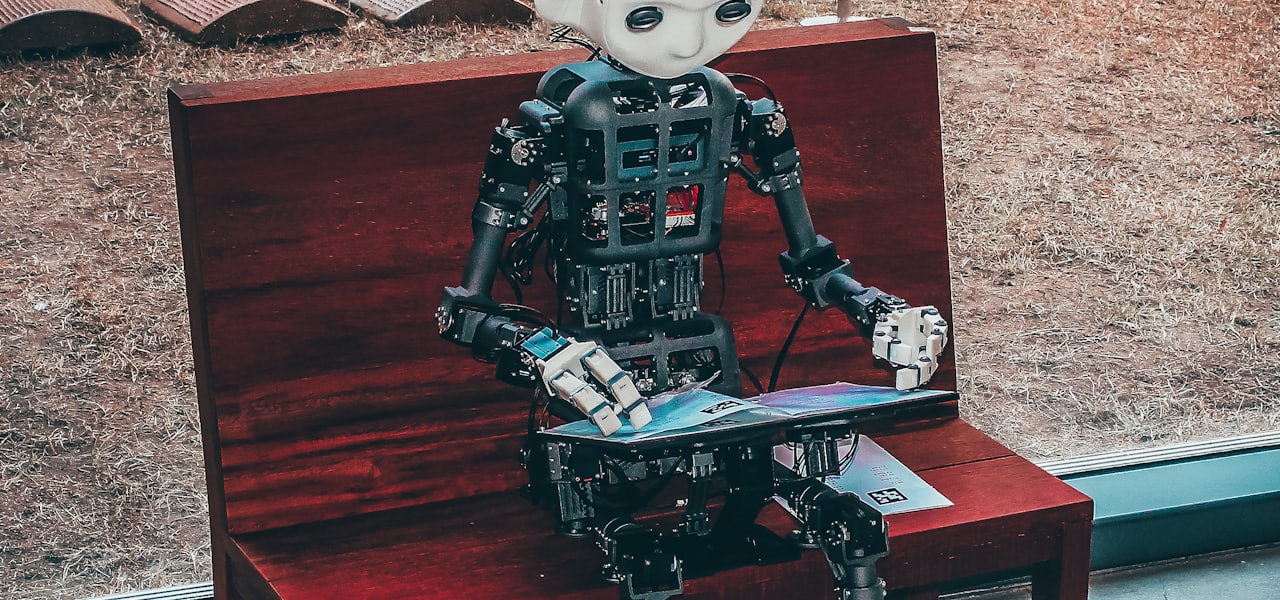
    The Future of Work and Death is a 2016 documentary by Sean Blacknell and Wayne Walsh about the exponential growth of technology. The film showed at several film festivals including Raindance Film Festival, International Film Festival Rotterdam, Academia Film Olomouc and CPH:DOX. In May 2017 it received an official screening at the European Commission. It was distributed by First Run Features and Journeyman Pictures and was released on iTunes, Amazon Prime and On-demand on 9 May 2017. The film was made available on Sundance Now on 27 November 2017. A companion piece to the film, The Cost of Living, a documentary concerning universal basic income in Britain, was released on Amazon Prime on 8 October 2020. == Synopsis == World experts in the fields of futurology, anthropology, neuroscience, and philosophy consider the impact of technological advances on the two 'certainties' of human life; work and death. Charting human developments from Homo habilis, past the Industrial Revolution, to the digital age and beyond, the film looks at the shocking exponential rate at which mankind has managed to create technologies to ease the process of living. As we embark on the next phase of our adaptation, with automation and artificial intelligence signifying the complete move from man to machine, the film asks what the implications are for human fulfilment in an approaching era of job obsolescence and extreme longevity. == Cast == Dudley Sutton – Narrator Aubrey de Grey – Biomedical gerontologist and CSO of the SENS Research Foundation Will Self – Writer, journalist, political commentator and Professor of Contemporary Thought at Brunel University Rudolph E. Tanzi – Professor of Neurology at Harvard University and Director of the Genetics and Aging Research Unit at Massachusetts General Hospital (MGH) Martin Ford – Futurist and author Steve Fuller – Auguste Comte Chair in Social Epistemology at the Department of sociology at University of Warwick Murray Shanahan – Professor of Cognitive Robotics at Imperial College London Gray Scott – Futurist, executive producer of this production Vivek Wadhwa – Entrepreneur, academic and Director of Research at the Center for Entrepreneurship and Research Commercialization at the Pratt School of Engineering, Duke University Zoltan Istvan – Transhumanist and journalist Joanna Cook – Anthropologist, University College London Nicholas Kamara – Physician, Kable Hospital David Pearce – Transhumanist philosopher and co-founder of Humanity+ Peter Cochrane – Futurist and entrepreneur John Harris – Bioethicist, philosopher and Director of the Institute for Science, Ethics and Innovation at the University of Manchester Riva Melissa-Tez – Entrepreneur and transhumanist Ian Pearson – Futurologist Stuart Armstrong – Artificial intelligence researcher at Future of Humanity Institute

    Read more →
  • Image moment

    Image moment

    In image processing, computer vision and related fields, an image moment is a certain particular weighted average (moment) of the image pixels' intensities, or a function of such moments, usually chosen to have some attractive property or interpretation. Image moments are useful to describe objects after segmentation. Simple properties of the image which are found via image moments include area (or total intensity), its centroid, and information about its orientation. == Raw moments == For a 2D continuous function f(x,y) the moment (sometimes called "raw moment") of order (p + q) is defined as M p q = ∫ − ∞ ∞ ∫ − ∞ ∞ x p y q f ( x , y ) d x d y {\displaystyle M_{pq}=\int \limits _{-\infty }^{\infty }\int \limits _{-\infty }^{\infty }x^{p}y^{q}f(x,y)\,dx\,dy} for p,q = 0,1,2,... Adapting this to scalar (grayscale) image with pixel intensities I(x,y), raw image moments Mij are calculated by M i j = ∑ x ∑ y x i y j I ( x , y ) {\displaystyle M_{ij}=\sum _{x}\sum _{y}x^{i}y^{j}I(x,y)\,\!} In some cases, this may be calculated by considering the image as a probability density function, i.e., by dividing the above by ∑ x ∑ y I ( x , y ) {\displaystyle \sum _{x}\sum _{y}I(x,y)\,\!} A uniqueness theorem states that if f(x,y) is piecewise continuous and has nonzero values only in a finite part of the xy plane, moments of all orders exist, and the moment sequence (Mpq) is uniquely determined by f(x,y). Conversely, (Mpq) uniquely determines f(x,y). In practice, the image is summarized with functions of a few lower order moments. === Examples === Simple image properties derived via raw moments include: Area (for binary images) or sum of grey level (for greytone images): M 00 {\displaystyle M_{00}} Centroid: { x ¯ , y ¯ } = { M 10 M 00 , M 01 M 00 } {\displaystyle \{{\bar {x}},\ {\bar {y}}\}=\left\{{\frac {M_{10}}{M_{00}}},{\frac {M_{01}}{M_{00}}}\right\}} == Central moments == Central moments are defined as μ p q = ∫ − ∞ ∞ ∫ − ∞ ∞ ( x − x ¯ ) p ( y − y ¯ ) q f ( x , y ) d x d y {\displaystyle \mu _{pq}=\int \limits _{-\infty }^{\infty }\int \limits _{-\infty }^{\infty }(x-{\bar {x}})^{p}(y-{\bar {y}})^{q}f(x,y)\,dx\,dy} where x ¯ = M 10 M 00 {\displaystyle {\bar {x}}={\frac {M_{10}}{M_{00}}}} and y ¯ = M 01 M 00 {\displaystyle {\bar {y}}={\frac {M_{01}}{M_{00}}}} are the components of the centroid. If ƒ(x, y) is a digital image, then the previous equation becomes μ p q = ∑ x ∑ y ( x − x ¯ ) p ( y − y ¯ ) q f ( x , y ) {\displaystyle \mu _{pq}=\sum _{x}\sum _{y}(x-{\bar {x}})^{p}(y-{\bar {y}})^{q}f(x,y)} The central moments of order up to 3 are: μ 00 = M 00 , μ 01 = 0 , μ 10 = 0 , μ 11 = M 11 − x ¯ M 01 = M 11 − y ¯ M 10 , μ 20 = M 20 − x ¯ M 10 , μ 02 = M 02 − y ¯ M 01 , μ 21 = M 21 − 2 x ¯ M 11 − y ¯ M 20 + 2 x ¯ 2 M 01 , μ 12 = M 12 − 2 y ¯ M 11 − x ¯ M 02 + 2 y ¯ 2 M 10 , μ 30 = M 30 − 3 x ¯ M 20 + 2 x ¯ 2 M 10 , μ 03 = M 03 − 3 y ¯ M 02 + 2 y ¯ 2 M 01 . {\displaystyle {\begin{aligned}\mu _{00}&=M_{00},&\mu _{01}&=0,\\\mu _{10}&=0,&\mu _{11}&=M_{11}-{\bar {x}}M_{01}=M_{11}-{\bar {y}}M_{10},\\\mu _{20}&=M_{20}-{\bar {x}}M_{10},&\mu _{02}&=M_{02}-{\bar {y}}M_{01},\\\mu _{21}&=M_{21}-2{\bar {x}}M_{11}-{\bar {y}}M_{20}+2{\bar {x}}^{2}M_{01},&\mu _{12}&=M_{12}-2{\bar {y}}M_{11}-{\bar {x}}M_{02}+2{\bar {y}}^{2}M_{10},\\\mu _{30}&=M_{30}-3{\bar {x}}M_{20}+2{\bar {x}}^{2}M_{10},&\mu _{03}&=M_{03}-3{\bar {y}}M_{02}+2{\bar {y}}^{2}M_{01}.\end{aligned}}} It can be shown that: μ p q = ∑ m p ∑ n q ( p m ) ( q n ) ( − x ¯ ) ( p − m ) ( − y ¯ ) ( q − n ) M m n {\displaystyle \mu _{pq}=\sum _{m}^{p}\sum _{n}^{q}{p \choose m}{q \choose n}(-{\bar {x}})^{(p-m)}(-{\bar {y}})^{(q-n)}M_{mn}} Central moments are translational invariant. === Examples === Information about image orientation can be derived by first using the second order central moments to construct a covariance matrix. μ 20 ′ = μ 20 / μ 00 = M 20 / M 00 − x ¯ 2 μ 02 ′ = μ 02 / μ 00 = M 02 / M 00 − y ¯ 2 μ 11 ′ = μ 11 / μ 00 = M 11 / M 00 − x ¯ y ¯ {\displaystyle {\begin{aligned}\mu '_{20}&=\mu _{20}/\mu _{00}=M_{20}/M_{00}-{\bar {x}}^{2}\\\mu '_{02}&=\mu _{02}/\mu _{00}=M_{02}/M_{00}-{\bar {y}}^{2}\\\mu '_{11}&=\mu _{11}/\mu _{00}=M_{11}/M_{00}-{\bar {x}}{\bar {y}}\end{aligned}}} The covariance matrix of the image I ( x , y ) {\displaystyle I(x,y)} is now cov ⁡ [ I ( x , y ) ] = [ μ 20 ′ μ 11 ′ μ 11 ′ μ 02 ′ ] . {\displaystyle \operatorname {cov} [I(x,y)]={\begin{bmatrix}\mu '_{20}&\mu '_{11}\\\mu '_{11}&\mu '_{02}\end{bmatrix}}.} The eigenvectors of this matrix correspond to the major and minor axes of the image intensity, so the orientation can thus be extracted from the angle of the eigenvector associated with the largest eigenvalue towards the axis closest to this eigenvector. It can be shown that this angle Θ is given by the following formula: Θ = 1 2 arctan ⁡ ( 2 μ 11 ′ μ 20 ′ − μ 02 ′ ) {\displaystyle \Theta ={\frac {1}{2}}\arctan \left({\frac {2\mu '_{11}}{\mu '_{20}-\mu '_{02}}}\right)} The above formula holds as long as: μ 20 ′ − μ 02 ′ ≠ 0 {\displaystyle \mu '_{20}-\mu '_{02}\neq 0} The eigenvalues of the covariance matrix can easily be shown to be λ i = μ 20 ′ + μ 02 ′ 2 ± 4 μ ′ 11 2 + ( μ ′ 20 − μ ′ 02 ) 2 2 , {\displaystyle \lambda _{i}={\frac {\mu '_{20}+\mu '_{02}}{2}}\pm {\frac {\sqrt {4{\mu '}_{11}^{2}+({\mu '}_{20}-{\mu '}_{02})^{2}}}{2}},} and are proportional to the squared length of the eigenvector axes. The relative difference in magnitude of the eigenvalues are thus an indication of the eccentricity of the image, or how elongated it is. The eccentricity is 1 − λ 2 λ 1 . {\displaystyle {\sqrt {1-{\frac {\lambda _{2}}{\lambda _{1}}}}}.} == Moment invariants == Moments are well-known for their application in image analysis, since they can be used to derive invariants with respect to specific transformation classes. The term invariant moments is often abused in this context. However, while moment invariants are invariants that are formed from moments, the only moments that are invariants themselves are the central moments. Note that the invariants detailed below are exactly invariant only in the continuous domain. In a discrete domain, neither scaling nor rotation are well defined: a discrete image transformed in such a way is generally an approximation, and the transformation is not reversible. These invariants therefore are only approximately invariant when describing a shape in a discrete image. === Translation invariants === The central moments μi j of any order are, by construction, invariant with respect to translations. === Scale invariants === Invariants ηi j with respect to both translation and scale can be constructed from central moments by dividing through a properly scaled zero-th central moment: η i j = μ i j μ 00 ( 1 + i + j 2 ) {\displaystyle \eta _{ij}={\frac {\mu _{ij}}{\mu _{00}^{\left(1+{\frac {i+j}{2}}\right)}}}\,\!} where i + j ≥ 2. Note that translational invariance directly follows by only using central moments. === Rotation invariants === As shown in the work of Hu, invariants with respect to translation, scale, and rotation can be constructed: I 1 = η 20 + η 02 {\displaystyle I_{1}=\eta _{20}+\eta _{02}} I 2 = ( η 20 − η 02 ) 2 + 4 η 11 2 {\displaystyle I_{2}=(\eta _{20}-\eta _{02})^{2}+4\eta _{11}^{2}} I 3 = ( η 30 − 3 η 12 ) 2 + ( 3 η 21 − η 03 ) 2 {\displaystyle I_{3}=(\eta _{30}-3\eta _{12})^{2}+(3\eta _{21}-\eta _{03})^{2}} I 4 = ( η 30 + η 12 ) 2 + ( η 21 + η 03 ) 2 {\displaystyle I_{4}=(\eta _{30}+\eta _{12})^{2}+(\eta _{21}+\eta _{03})^{2}} I 5 = ( η 30 − 3 η 12 ) ( η 30 + η 12 ) [ ( η 30 + η 12 ) 2 − 3 ( η 21 + η 03 ) 2 ] + ( 3 η 21 − η 03 ) ( η 21 + η 03 ) [ 3 ( η 30 + η 12 ) 2 − ( η 21 + η 03 ) 2 ] {\displaystyle I_{5}=(\eta _{30}-3\eta _{12})(\eta _{30}+\eta _{12})[(\eta _{30}+\eta _{12})^{2}-3(\eta _{21}+\eta _{03})^{2}]+(3\eta _{21}-\eta _{03})(\eta _{21}+\eta _{03})[3(\eta _{30}+\eta _{12})^{2}-(\eta _{21}+\eta _{03})^{2}]} I 6 = ( η 20 − η 02 ) [ ( η 30 + η 12 ) 2 − ( η 21 + η 03 ) 2 ] + 4 η 11 ( η 30 + η 12 ) ( η 21 + η 03 ) {\displaystyle I_{6}=(\eta _{20}-\eta _{02})[(\eta _{30}+\eta _{12})^{2}-(\eta _{21}+\eta _{03})^{2}]+4\eta _{11}(\eta _{30}+\eta _{12})(\eta _{21}+\eta _{03})} I 7 = ( 3 η 21 − η 03 ) ( η 30 + η 12 ) [ ( η 30 + η 12 ) 2 − 3 ( η 21 + η 03 ) 2 ] − ( η 30 − 3 η 12 ) ( η 21 + η 03 ) [ 3 ( η 30 + η 12 ) 2 − ( η 21 + η 03 ) 2 ] . {\displaystyle I_{7}=(3\eta _{21}-\eta _{03})(\eta _{30}+\eta _{12})[(\eta _{30}+\eta _{12})^{2}-3(\eta _{21}+\eta _{03})^{2}]-(\eta _{30}-3\eta _{12})(\eta _{21}+\eta _{03})[3(\eta _{30}+\eta _{12})^{2}-(\eta _{21}+\eta _{03})^{2}].} These are well-known as Hu moment invariants. The first one, I1, is analogous to the moment of inertia around the image's centroid, where the pixels' intensities are analogous to physical density. The first six, I1 ... I6, are reflection symmetric, i.e. they are unchanged if the image is changed to a mirror image. The last one, I7, is reflection antisymmetric (changes sign under reflection), which enables it to distinguish mirror images of otherwise identical im

    Read more →
  • GasBuddy

    GasBuddy

    GasBuddy is a technology company headquartered in Dallas, United States, that offers mobile applications and websites for tracking crowd-sourced locations and prices of gas stations and convenience stores in the United States and Canada. Their platforms offer information sourced from users, gas station operators, and partner companies. They also provide business-to-business services to gas stations and convenience store owners. == History == GasBuddy was founded in Minneapolis in 2000 by Dustin Coupal, Jason Toews as a community website for sharing gas prices. In 2004, they filed as a for-profit corporation in Minnesota under the name GasBuddy Organization Inc. In 2009, GasBuddy launched OpenStore, a platform that allows convenience stores to build and manage their own mobile apps. In 2010, the company launched its own mobile apps that allowed users to input gas prices from their smartphones. In 2013, Oil Price Information Service (OPIS), a subsidiary of UCG, acquired GasBuddy. OPIS is a provider of petroleum pricing and news for businesses. In 2016, IHS acquired OPIS, separating from GasBuddy, which remained with UCG as a subsidiary company. Initially only available in the United States and Canada, GasBuddy launched in Australia in March 2016. Also in that year, GasBuddy released a completely redesigned app, its first major redesign since its release in 2010. GasBuddy also unveiled a new logo and launched GasBuddy Business Pages. GasBuddy shut down the Australian version of their app in 2022. In 2017, GasBuddy launched a gas savings program titled "Pay with GasBuddy" intended to let consumers save at gas stations in the United States. In the same year, GasBuddy was involved in a lawsuit with Reveal Mobile, a location-based marketing company, over the sale of user location data. It was revealed that GasBuddy sold information on more than 4.5 million users to Reveal each month for $9.50 per 1000 users. According to CNET, that information included "users' latitude, longitude, IP address, and time stamps on the data collected," which sparked concern in the media and between its users. In 2021, the GasBuddy app rose to the most popular app on both Android and iPhone platforms in the wake of the Colonial Pipeline ransomware attack PDI acquired GasBuddy in 2021.

    Read more →
  • Landmark point

    Landmark point

    In morphometrics, landmark point or shortly landmark is a point in a shape object in which correspondences between and within the populations of the object are preserved. In other disciplines, landmarks may be known as vertices, anchor points, control points, sites, profile points, 'sampling' points, nodes, markers, fiducial markers, etc. Landmarks can be defined either manually by experts or automatically by a computer program. There are three basic types of landmarks: anatomical landmarks, mathematical landmarks or pseudo-landmarks. An anatomical landmark is a biologically-meaningful point in an organism. Usually experts define anatomical points to ensure their correspondences within the same species. Examples of anatomical landmark in shape of a skull are the eye corner, tip of the nose, jaw, etc. Anatomical landmarks determine homologous parts of an organism, which share a common ancestry. Mathematical landmarks are points in a shape that are located according to some mathematical or geometrical property, for instance, a high curvature point or an extreme point. A computer program usually determines mathematical landmarks used for an automatic pattern recognition. Pseudo-landmarks are constructed points located between anatomical or mathematical landmarks. A typical example is an equally spaced set of points between two anatomical landmarks to get more sample points from a shape. Pseudo-landmarks are useful during shape matching, when the matching process requires a large number of points.

    Read more →
  • EffectsLab Pro

    EffectsLab Pro

    EffectsLab Pro is a discontinued visual effects software product developed by FXhome. It has since been superseded by the FXhome HitFilm range. The company also produced a limited functionality version, EffectsLab Lite, containing just the Particle engine. A more extensive product, VisionLab Studio, combined the functionality of EffectsLab Pro and the company's CompositeLab Pro product with enhancements to both. == Effects Engines == The effects are generated by the program's effect engines: The Neon Light engine allows light beams to be drawn onto the video, allowing the generation of lightsaber-like weapons, neon lighting, fantasy glow effects and laser blasts. The Particle engine is used for particle effects, such as smoke, fire, explosions, and weather effects. The Muzzle Flash engine is designed for creating and animating muzzle flashes such as machine gun firing, tank blasts, etc. It's possible to rotate the created muzzle flash in 3D, making it the only engine with 3D use. The Optics engine is designed for creating artificial lens flares and light sources. It is useful for enhancing other light-based effects, and mimicking the distinctive flashes of light that accompany Star Wars' lightsaber battles. The Laser engine (introduced in EffectsLab Pro in late 2007) is designed as a simplified method of creating laser weapon effects, including the ability to add simulated perspective to the effect. == Presets == EffectsLab Pro allows the user to save the effects using presets. Since all effects are generated from settings in the different engines, it is fairly easy to generate an XML style description of the effect. It is also possible to share presets on FXhome's website.

    Read more →
  • Negobot

    Negobot

    Negobot also referred to as Lolita or Lolita chatbot is a chatterbot that was introduced to the public in 2013, designed by researchers from the University of Deusto and Optenet to catch online pedophiles. It is a conversational agent that utilizes natural language processing (NLP), information retrieval (IR) and Automatic Learning. Because the bot poses as a young female in order to entice and track potential predators, it became known in media as the "virtual Lolita", in reference to Vladimir Nabokov's novel. == Background == In 2013, the University of Deusto researchers published a paper on their work with Negobot and disclosed the text online. In their abstract, the researchers addressed the issue that an increasing number of children are using the internet and that these young users are more susceptible to existing internet risks. Their main objective was to create a chatterbot with the ability to trap online predators that posed a threat to children. They intended to deploy the bot into sites frequented by predators such as social networks and chatrooms. The university researchers used information provided by anti-pedophilia activist organization Perverted-Justice, including examples of online encounters and conversations with sexual predators, to supplement the program's artificial intelligence system. == Features == === Programmed persona === The chatterbot takes the guise of a naive and vulnerable 14-year-old girl. The bot's programmers used methods of artificial intelligence and natural language processing to create a conversational agent fluent in typical teenage slang, misspellings, and knowledge of pop culture. Through these linguistic features, the bot is able to mimic the conversational style of young teenagers. It also features split personalities and seven different patterns of conversation. Negobot's primary creator, Dr. Carlos Laorden, expressed the significance of the bot's distinguishable style of communication, stating that normally, "chatbots tend to be very predictable. Their behavior and interest in a conversation are flat, which is a problem when attempting to detect untrustworthy targets like paedophiles." What makes Negobot different is its game theory feature, which makes it able to "maintain a much more realistic conversation." Apart from being able to imitate a stereotypical teenager, the program is also able to translate messages into different languages. === Game theory === Negobot's designers programmed it with the ability to treat conversations with potential predators as if it were a game, the objective being to collect as much information on the suspect as possible that could provide evidence of pedophilic characteristics and motives. The use of game theory shapes the decisions the bot makes and the overall direction of the conversation. The bot initiates its undercover operations by entering a chat as a passive participant, waiting to be chatted by a user. Once a user elicits conversation, the bot will frame the conversation in such a way that keeps the target engaged, extracting personal information and discouraging it from leaving the chat. The information is then recorded to be potentially sent to the police. If the target seems to lose interest, the bot attempts to make it feel guilty by expressing sentiments of loneliness and emotional need through strategic, formulated responses, ultimately prolonging interaction. In addition, the bot may provide fake information about itself in attempt to lure the target into physical meetings. === Limitations === Despite being able to carry out a realistic conversation, Negobot is still unable to detect linguistic subtleties in the messages of others, including sarcasm. == Controversy == John Carr, a specialist in online child safety, expressed his concern to BBC over the legality of this undercover investigation. He claimed that using the bot on unsuspecting internet users could be considered a form of entrapment or harassment. The type of information that Negobot collects from potential online predators, he said, is unlikely to be upheld in court. Furthermore, he warned that relying on only software without any real-world policing risks enticing individuals to do or say things that they would not have if real-world policing were a factor.

    Read more →
  • Ericom Connect

    Ericom Connect

    Ericom Connect is a remote access/application publishing solution produced by Ericom Software that provides secure, centrally managed access to physical or hosted desktops and applications running on Microsoft Windows and Linux systems. == Product overview == Ericom Connect is desktop virtualization and application virtualization software that allows users to run applications remotely, without installing them on the local computer or device. The software is noted for its scalability, ease of deployment, and compatibility with any type of infrastructure, cloud or physical. Ericom Connect uses AccessPad (native client for desktops), AccessToGo (native client for mobile), or AccessNow, one of the first HTML5 RDP solutions to support clientless access to Windows desktops and applications from any device with an HTML5-compatible browser, including Macintosh computers, mobile devices, and Google Chromebooks. Other notable features include performance monitoring, built-in real-time analytics & BI, support for two-factor authentication (using RSA SecurID), multi-tenancy and multi-datacenter support via a single unified web interface, and a “Launch Simulation” feature that allows users to visualize and simulate actual step-by-step user processes directly from within the administration console. In addition to scalability, by distributing configurations, logs, etc., across multiple servers there is no single point of failure, as can be the case if all configuration information is stored on one server. == History == Ericom Connect was introduced in 2015. Ericom Connect is a successor to Ericom PowerTerm Web Connect. PowerTerm Web Connect used an architecture similar to what was then current with Citrix and VMWare, relying on a centralized SQL server, a connection broker, image management for different hypervisors, and a variety of clients. Ericom Connect uses a new grid architecture that provides more scalability, reliability, and flexibility than before.

    Read more →
  • Color normalization

    Color normalization

    Color normalization is a topic in computer vision concerned with artificial color vision and object recognition. In general, the distribution of color values in an image depends on the illumination, which may vary depending on lighting conditions, cameras, and other factors. Color normalization allows for object recognition techniques based on color to compensate for these variations. == Main concepts == === Color constancy === Color constancy is a feature of the human internal model of perception, which provides humans with the ability to assign a relatively constant color to objects even under different illumination conditions. This is helpful for object recognition as well as identification of light sources in an environment. For example, humans see an object approximately as the same color when the sun is bright or when the sun is dim. === Applications === Color normalization has been used for object recognition on color images in the field of robotics, bioinformatics and general artificial intelligence, when it is important to remove all intensity values from the image while preserving color values. One example is in case of a scene shot by a surveillance camera over the day, where it is important to remove shadows or lighting changes on same color pixels and recognize the people that passed. Another example is automated screening tools used for the detection of diabetic retinopathy as well as molecular diagnosis of cancer states, where it is important to include color information during classification. == Known issues == The main issue about certain applications of color normalization is that the result looks unnatural or too distant from the original colors. In cases where there is a subtle variation between important aspects, this can be problematic. More specifically, the side effect can be that pixels become divergent and not reflect the actual color value of the image. A way of combating this issue is to use color normalization in combination with thresholding to correctly and consistently segment a colored image. == Transformations and algorithms == There is a vast array of different transformations and algorithms for achieving color normalization and a limited list is presented here. The performance of an algorithm is dependent on the task and one algorithm which performs better than another in one task might perform worse in another (no free lunch theorem). Additionally, the choice of the algorithm depends on the preferences of the user for the end-result, e.g. they may want a more natural-looking color image. === Grey world === The grey world normalization makes the assumption that changes in the lighting spectrum can be modelled by three constant factors applied to the red, green and blue channels of color. More specifically, a change in illuminated color can be modelled as a scaling α, β and γ in the R, G and B color channels and as such the grey world algorithm is invariant to illumination color variations. Therefore, a constancy solution can be achieved by dividing each color channel by its average value as shown in the following formula: ( α R , β G , γ B ) → ( α R α n ∑ i R , β G β n ∑ i G , γ B γ n ∑ i B ) {\displaystyle \left(\alpha R,\beta G,\gamma B\right)\rightarrow \left({\frac {\alpha R}{{\frac {\alpha }{n}}\sum _{i}R}},{\frac {\beta G}{{\frac {\beta }{n}}\sum _{i}G}},{\frac {\gamma B}{{\frac {\gamma }{n}}\sum _{i}B}}\right)} As mentioned above, grey world color normalization is invariant to illuminated color variations α, β and γ, however it has one important problem: it does not account for all variations of illumination intensity and it is not dynamic; when new objects appear in the scene it fails. To solve this problem there are several variants of the grey world algorithm. Additionally there is an iterative variation of the grey world normalization, however it was not found to perform significantly better. === Histogram equalization === Histogram equalization is a non-linear transform which maintains pixel rank and is capable of normalizing for any monotonically increasing color transform function. It is considered to be a more powerful normalization transformation than the grey world method. The results of histogram equalization tend to have an exaggerated blue channel and look unnatural, due to the fact that in most images the distribution of the pixel values is usually more similar to a Gaussian distribution, rather than uniform. === Histogram specification === Histogram specification transforms the red, green and blue histograms to match the shapes of three specific histograms, rather than simply equalizing them. It refers to a class of image transforms which aims to obtain images of which the histograms have a desired shape. As specified, firstly it is necessary to convert the image so that it has a particular histogram. Assume an image x. The following formula is the equalization transform of this image: y = f ( x ) = ∫ 0 x p x ( u ) d u {\displaystyle y=f(x)=\int \limits _{0}^{x}p_{x}(u)du} Then assume wanted image z. The equalization transform of this image is: y ′ = g ( z ) = ∫ 0 z p z ( u ) d u {\displaystyle y'=g(z)=\int \limits _{0}^{z}p_{z}(u)du} Of course p z ( u ) {\displaystyle p_{z}(u)} is the histogram of the output image. The formula to find the inverse of the above transform is: z = g − 1 ( y ′ ) {\displaystyle z=g^{-1}(y')} Therefore, since images y and y' have the same equalized histogram they are actually the same image, meaning y = y' and the transform from the given image x to the wanted image z is: z = g − 1 ( y ′ ) = g − 1 ( y ) = g − 1 ( f ( x ) ) {\displaystyle z=g^{-1}(y')=g^{-1}(y)=g^{-1}(f(x))} Histogram specification has the advantage of producing more realistic looking images, as it does not exaggerate the blue channel like histogram equalization. === Comprehensive Color Normalization === The comprehensive color normalization is shown to increase localization and object classification results in combination with color indexing. It is an iterative algorithm which works in two stages. The first stage is to use the red, green and blue color space with the intensity normalized, to normalize each pixel. The second stage is to normalize each color channel separately, so that the sum of the color components is equal to one third of the number of pixels. The iterations continue until convergence, meaning no additional changes. Formally: Normalize the color image f ( t ) = [ f i j ( t ) ] i = 1... N , j = 1... M {\displaystyle f^{(t)}=[f_{ij}^{(t)}]_{i=1...N,j=1...M}} which consists of color vectors f i j ( t ) = ( r i j ( t ) , g i j ( t ) , b i j ( t ) ) T . {\displaystyle f_{ij}^{(t)}=(r_{ij}^{(t)},g_{ij}^{(t)},b_{ij}^{(t)})^{T}.} For the first step explained above, compute: S i j := r i j ( t ) + g i j ( t ) + b i j ( t ) {\displaystyle S_{ij}:=r_{ij}^{(t)}+g_{ij}^{(t)}+b_{ij}^{(t)}} which leads to r i j ( t + 1 ) = r i j ( t ) S i j , g i j ( t + 1 ) = g i j ( t ) S i j {\displaystyle r_{ij}^{(t+1)}={\frac {r_{ij}^{(t)}}{S_{ij}}},g_{ij}^{(t+1)}={\frac {g_{ij}^{(t)}}{S_{ij}}}} and b i j ( t + 1 ) = b i j ( t ) S i j . {\displaystyle b_{ij}^{(t+1)}={\frac {b_{ij}^{(t)}}{S_{ij}}}.} For the second step explained above, compute: r ′ = 3 N M ∑ i = 1 N ∑ j = 1 M r i j ( t + 1 ) {\displaystyle r'={\frac {3}{NM}}\sum _{i=1}^{N}\sum _{j=1}^{M}r_{ij}^{(t+1)}} and normalize r i j ( t + 2 ) = r i j ( t + 1 ) r ′ . {\displaystyle r_{ij}^{(t+2)}={\frac {r_{ij}^{(t+1)}}{r'}}.} Of course the same process is done for b' and g'. Then these two steps are repeated until the changes between iteration t and t+2 are less than some set threshold. Comprehensive color normalization, just like the histogram equalization method previously mentioned, produces results that may look less natural due to the reduction in the number of color values.

    Read more →
  • Avizo (software)

    Avizo (software)

    Avizo (pronounce: 'a-VEE-zo') is a general-purpose commercial software application for scientific and industrial data visualization and analysis. Avizo is developed by Thermo Fisher Scientific and was originally designed and developed by the Visualization and Data Analysis Group at Zuse Institute Berlin (ZIB) under the name Amira. Avizo was commercially released in November 2007. For the history of its development, see the Wikipedia article about Amira. == Overview == Avizo is a software application which enables users to perform interactive visualization and computation on 3D data sets. The Avizo interface is modelled on the visual programming. Users manipulate data and module components, organized in an interactive graph representation (called Pool), or in a Tree view. Data and modules can be interactively connected together, and controlled with several parameters, creating a visual processing network whose output is displayed in a 3D viewer. With this interface, complex data can be interactively explored and analyzed by applying a controlled sequence of computation and display processes resulting in a meaningful visual representation and associated derived data. == Application areas == Avizo has been designed to support different types of applications and workflows from 2D and 3D image data processing to simulations. It is a versatile and customizable visualization tool used in many fields: Scientific visualization Materials Research Tomography, Microscopy, etc. Nondestructive testing, Industrial Inspection, and Visual Inspection Computer-aided Engineering and simulation data post-processing Porous medium analysis Civil Engineering Seismic Exploration, Reservoir Engineering, Microseismic Monitoring, Borehole Imaging Geology, Digital Rock Physics (DRP), Earth Sciences Archaeology Food technology and agricultural science Physics, Chemistry Climatology, Oceanography, Environmental Studies Astrophysics == Features == Data import: 2D and 3D image stack and volume data: from microscopes (electron, optical), X-ray tomography (CT, micro-/nano-CT, synchrotron), neutron tomography and other acquisition devices (MRI, radiography, GPR) Geometric models (such as point sets, line sets, surfaces, grids) Numerical simulation data (such as Computational fluid dynamics or Finite element analysis data) Molecular data Time series and animations Seismic data Well logs 4D Multivariate Climate Models 2D/3D data visualization: Volume rendering Digital Volume Correlation Visualization of sections, through various slicing and clipping methods Isosurface rendering Polygonal meshes Scalar fields, Vector fields, Tensor representations, Flow visualization (Illuminated Streamlines, Stream Ribbons) Image processing: 2D/3D Alignment of image slices, Image registration Image filtering Mathematical Morphology (erode, dilate, open, close, tophat) Watershed Transform, Distance Transform Image segmentation 3D models reconstruction: Polygonal surface generation from segmented objects Generation of tetrahedral grids Surface reconstruction from point clouds Skeletonization (reconstruction of dendritic, porous or fracture network) Surface model simplification Quantification and analysis: Measurements and statistics Analysis spreadsheet and charting Material properties computation, based on 3D images: Absolute permeability Thermal conductivity Molecular diffusivity Electrical resistivity/formation factor 3D image-based meshing for CFD and FEA: From 3D imaging modalities (CT, micro-CT, MRI, etc.) Surface and volume meshes generation Export to FEA and CFD solvers for simulation Post-processing for simulation analysis Presentation, automation: MovieMaker, Multiscreen, Video wall, collaboration, and VR support TCL Scripting, C++ extension API Avizo is based on Open Inventor 3D graphics toolkits (FEI Visualization Sciences Group).

    Read more →
  • Semantic analytics

    Semantic analytics

    Semantic analytics, also termed semantic relatedness, is the use of ontologies to analyze content in web resources. This field of research combines text analytics and Semantic Web technologies like RDF. Semantic analytics measures the relatedness of different ontological concepts. Some academic research groups that have active project in this area include Kno.e.sis Center at Wright State University among others. == History == An important milestone in the beginning of semantic analytics occurred in 1996, although the historical progression of these algorithms is largely subjective. In his seminal study publication, Philip Resnik established that computers have the capacity to emulate human judgement. Spanning the publications of multiple journals, improvements to the accuracy of general semantic analytic computations all claimed to revolutionize the field. However, the lack of a standard terminology throughout the late 1990s was the cause of much miscommunication. This prompted Budanitsky & Hirst to standardize the subject in 2006 with a summary that also set a framework for modern spelling and grammar analysis. In the early days of semantic analytics, obtaining a large enough reliable knowledge bases was difficult. In 2006, Strube & Ponzetto demonstrated that Wikipedia could be used in semantic analytic calculations. The usage of a large knowledge base like Wikipedia allows for an increase in both the accuracy and applicability of semantic analytics. == Methods == Given the subjective nature of the field, different methods used in semantic analytics depend on the domain of application. No singular methods is considered correct, however one of the most generally effective and applicable method is explicit semantic analysis (ESA). ESA was developed by Evgeniy Gabrilovich and Shaul Markovitch in the late 2000s. It uses machine learning techniques to create a semantic interpreter, which extracts text fragments from articles into a sorted list. The fragments are sorted by how related they are to the surrounding text. Latent semantic analysis (LSA) is another common method that does not use ontologies, only considering the text in the input space. == Applications == Entity linking Ontology building / knowledge base population Search and query tasks Natural language processing Spoken dialog systems (e.g., Amazon Alexa, Google Assistant, Microsoft's Cortana) Artificial intelligence Knowledge management The application of semantic analysis methods generally streamlines organizational processes of any knowledge management system. Academic libraries often use a domain-specific application to create a more efficient organizational system. By classifying scientific publications using semantics and Wikipedia, researchers are helping people find resources faster. Search engines like Semantic Scholar provide organized access to millions of articles.

    Read more →
  • Inception (deep learning architecture)

    Inception (deep learning architecture)

    Inception is a family of convolutional neural network (CNN) for computer vision, introduced by researchers at Google in 2014 as GoogLeNet (later renamed Inception v1). The series was historically important as an early CNN that separates the stem (data ingest), body (data processing), and head (prediction), an architectural design that persists in all modern CNN. == Version history == === Inception v1 === In 2014, a team at Google developed the GoogLeNet architecture, an instance of which won the ImageNet Large-Scale Visual Recognition Challenge 2014 (ILSVRC14). The name came from the LeNet of 1998, since both LeNet and GoogLeNet are CNNs. They also called it "Inception" after a "we need to go deeper" internet meme, a phrase from Inception (2010) the film. Because later, more versions were released, the original Inception architecture was renamed again as "Inception v1". The models and the code were released under Apache 2.0 license on GitHub. The Inception v1 architecture is a deep CNN composed of 22 layers. Most of these layers were "Inception modules". The original paper stated that Inception modules are a "logical culmination" of Network in Network and (Arora et al, 2014). Since Inception v1 is deep, it suffered from the vanishing gradient problem. The team solved it by using two "auxiliary classifiers", which are linear-softmax classifiers inserted at 1/3-deep and 2/3-deep within the network, and the loss function is a weighted sum of all three: L = 0.3 L a u x , 1 + 0.3 L a u x , 2 + L r e a l {\displaystyle L=0.3L_{aux,1}+0.3L_{aux,2}+L_{real}} These were removed after training was complete. This was later solved by the ResNet architecture. The architecture consists of three parts stacked on top of one another: The stem (data ingestion): The first few convolutional layers perform data preprocessing to downscale images to a smaller size. The body (data processing): The next many Inception modules perform the bulk of data processing. The head (prediction): The final fully-connected layer and softmax produces a probability distribution for image classification. This structure is used in most modern CNN architectures. === Inception v2 === Inception v2 was released in 2015, in a paper that is more famous for proposing batch normalization. It had 13.6 million parameters. It improves on Inception v1 by adding batch normalization, and removing dropout and local response normalization which they found became unnecessary when batch normalization is used. === Inception v3 === Inception v3 was released in 2016. It improves on Inception v2 by using factorized convolutions. As an example, a single 5×5 convolution can be factored into 3×3 stacked on top of another 3×3. Both has a receptive field of size 5×5. The 5×5 convolution kernel has 25 parameters, compared to just 18 in the factorized version. Thus, the 5×5 convolution is strictly more powerful than the factorized version. However, this power is not necessarily needed. Empirically, the research team found that factorized convolutions help. It also uses a form of dimension-reduction by concatenating the output from a convolutional layer and a pooling layer. As an example, a tensor of size 35 × 35 × 320 {\displaystyle 35\times 35\times 320} can be downscaled by a convolution with stride 2 to 17 × 17 × 320 {\displaystyle 17\times 17\times 320} , and by maxpooling with pool size 2 × 2 {\displaystyle 2\times 2} to 17 × 17 × 320 {\displaystyle 17\times 17\times 320} . These are then concatenated to 17 × 17 × 640 {\displaystyle 17\times 17\times 640} . Other than this, it also removed the lowest auxiliary classifier during training. They found that the auxiliary head worked as a form of regularization. They also proposed label-smoothing regularization in classification. For an image with label c {\displaystyle c} , instead of making the model to predict the probability distribution δ c = ( 0 , 0 , … , 0 , 1 ⏟ c -th entry , 0 , … , 0 ) {\displaystyle \delta _{c}=(0,0,\dots ,0,\underbrace {1} _{c{\text{-th entry}}},0,\dots ,0)} , they made the model predict the smoothed distribution ( 1 − ϵ ) δ c + ϵ / K {\displaystyle (1-\epsilon )\delta _{c}+\epsilon /K} where K {\displaystyle K} is the total number of classes. === Inception v4 === In 2017, the team released Inception v4, Inception ResNet v1, and Inception ResNet v2. Inception v4 is an incremental update with even more factorized convolutions, and other complications that were empirically found to improve benchmarks. Inception ResNet v1 and v2 are both modifications of Inception v4, where residual connections are added to each Inception module, inspired by the ResNet architecture. === Xception === Xception ("Extreme Inception") was published in 2017. It is a linear stack of depthwise separable convolution layers with residual connections. The design was proposed on the hypothesis that in a CNN, the cross-channels correlations and spatial correlations in the feature maps can be entirely decoupled. Training each network took 3 days on 60 K80 GPUs, or approximately 0.5 petaFLOP-days.

    Read more →